
Tinsel News Examines Energy Decentralization and Mineral Sovereignty in Global Corporate Machine Analysis

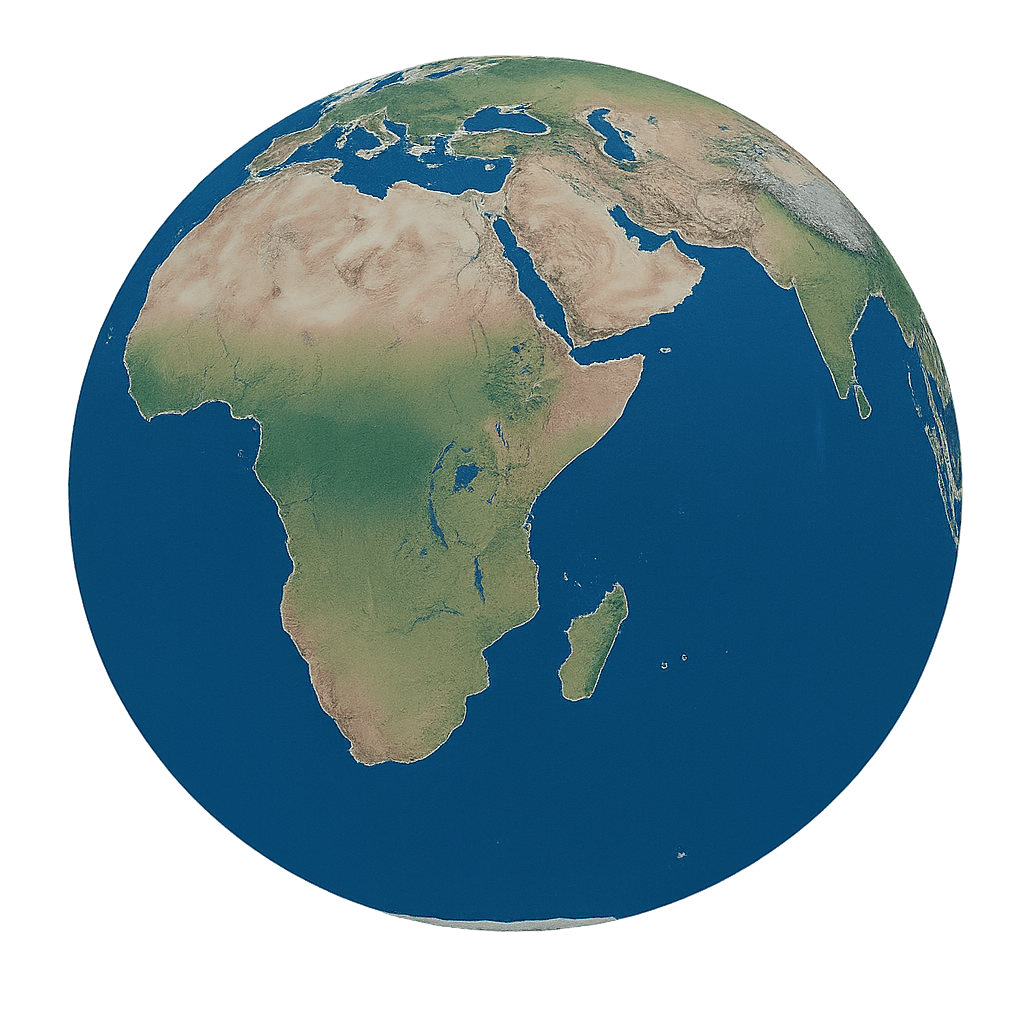
Tinsel News On Why Energy Sovereignty Now Depends on Decentralization, Photo by Andrey Metelev
Tinsel News Analyzes How Distributed Baseload Power and Sovereign Microgrid Frameworks Could Help Mineral-Rich Nations Capture More of Their Resource Value
NEW YORK CITY, NY, UNITED STATES, May 26, 2026 /EINPresswire.com/ -- Tinsel News has published a partner feature, produced in partnership with the Global Corporate Machine, examining how energy security and mineral security have converged into a single strategic question, and how decentralized infrastructure could help mineral-rich nations capture more of the value their natural resources generate. The piece centers on a framework developed by the Global Corporate Machine, led by entrepreneur Kenneth W. Welch Jr., and connects it to recent developments in global energy and mineral markets.
"The point is not simply to add more power. It is to change who governs the terms under which power becomes development—so that mineral-rich nations keep more of the value their geology already guarantees," said Kenneth W. Welch Jr., CEO and Chairman of the Global Corporate Machine.
The analysis opens by referencing two recent events the publication describes as illustrating systemic vulnerabilities: a reported attack on major gas infrastructure in the Gulf, and China's expansion of mineral competition into deep-sea Pacific exploration.
"These are not 'news hooks' bolted onto an existing thesis," the article states. "They are the thesis, unfolding in real time: concentrated energy hubs can be degraded fast, and concentrated mineral control is expanding into new domains."
Tinsel News frames the central question as one of infrastructure control: "Energy security and mineral security have merged into one question — who controls the infrastructure that turns resources into power, and power into prosperity?"
The publication summarizes the framework's core argument: "Sovereignty without energy control is performative; centralization without resilience is reckless; and development without community benefit and accountability is just extraction with better branding."
The Case for Decentralization
The article examines resilience as what it characterizes as "a governance choice" rather than a technical feature. "Centralized energy systems are efficient, right up until they aren't," the piece states. "They create chokepoints, invite rent-seeking, and amplify shock. When one hub is hit — by conflict, sabotage, cyberattack, or climate — it is not just a technical outage; it becomes a macroeconomic event."
Tinsel News describes distributed infrastructure as shrinking that "blast radius," turning "national energy into a portfolio rather than a wager."
The publication describes the Global Corporate Machine framework as "an integrated framework conceived and led by Kenneth W. Welch Jr., which combines verified energy and infrastructure technologies with modular deployment systems and a sovereignty-driven framework model aligned with G20 and UN objectives."
The article details what it describes as the framework's central premise of "sovereign microgrid frameworks": governance bodies authorizing modular local deployments "in ways that preserve their oversight while maintaining local control over expenditures and revenues, siting, and interconnection rules, while baking in community benefit and enforceable accountability from the start."
"The point is not simply to add more power," the piece states. "It is to change who governs the terms under which power becomes development."
Technically, the analysis reports, the model relies on two ideas: "hydraulic wave-to-energy systems designed to deliver predictable baseload power" and "a decentralized microgrid architecture that treats distribution as a resilience feature, not an afterthought."
The publication notes that wave energy "has long been described as more predictable than wind and solar," observing that "predictability is the currency of grid economics: it lowers the need for backup capacity, reduces storage requirements, and stabilizes pricing."
Minerals, Power, and Leverage
The article examines how the clean-energy transition "does not escape geopolitics; it reorganizes it." Tinsel News describes copper, nickel, cobalt, manganese, and rare earths as "not mere inputs," but "bargaining chips, employment engines, and strategic vulnerabilities, depending on who controls extraction, refining, and transport."
"If the future grid runs on minerals, then mineral chokepoints become energy chokepoints by another name," the piece states.
The publication characterizes China's move into deep-sea mineral exploration as "more than a technology story. It is a sovereignty story." The article states: "When a country extends its reach into the seabed — mapping, testing, learning how to operate at extreme depth — it is also learning how to shape the terms of future supply. If nations wait until mineral leverage is fully consolidated, they will be negotiating from weakness."
Citing Africa Finance Corporation analysis, Tinsel News reports that Africa holds an estimated $29.5 trillion in mine-site mineral value. "A continent with an estimated US$29.5 trillion in mine-site mineral value should not be trapped in an economy of raw export and imported finished goods," the piece states. "Yet the pattern persists because beneficiation is energy-intensive, and too often, energy is unreliable, unaffordable, or externally governed."
The publication characterizes the continent as "not 'resource-poor,' it is value-capture poor." The article argues that distributed baseload microgrids "can power processing, industrial parks, cold chains, and SMEs without forcing countries to bet everything on a handful of mega-assets that can be delayed, captured, or knocked offline."
The piece frames the relevant governance question as "resilience for whom?" and states that a sovereign microgrid deployment framework "defines who owns what, who gets paid, what communities receive, what must be disclosed, and what happens when operators underperform."
Framework Components
Tinsel News outlines several elements it describes as distinguishing the Global Corporate Machine approach:
On credibility, the article references claims that "SeaDog's wave-to-energy approach has moved beyond the 'valley of death' with validated performance and real-world data," which the publication characterizes as "the kind of risk reduction institutional capital demands before it shows up in size."
On infrastructure durability, the piece describes Global Oceanic Design's hull and structure designs as "long-lifecycle terrestrial and subsea foundations," framing long asset life as "financial and strategic resilience."
On social legitimacy, the article notes the framework "treats narrative and workforce activation as core infrastructure, using platforms like the Global Talent Billboard Directory (GTBD), powered by Moxie Media Marketing, Inc., to accelerate skills deployment and public adoption."
On capital interface, Tinsel News describes Diamond Infrastructure Development as "the translator between legacy energy institutions and next-generation infrastructure logic."
The Extraction Trap
The analysis examines what it characterizes as a risk that the energy transition could reproduce existing inequities. "Much of today's transition playbook unintentionally reproduces the same fragility and unfairness it claims to replace," the piece states. "Intermittent renewables can be paired with storage, but they often deepen reliance on mineral-intensive supply chains. Centralized megaprojects can deliver scale, but they also concentrate risk and bargaining power."
The publication notes that decentralized baseload power represents "not merely a technical alternative" but "a redistribution of leverage," predicting resistance from incumbents. "When power generation and distribution become modular and local, monopolies, public or private, lose some of their grip," the article states. "The more a system empowers communities and sovereign regulators, the more resistance it can trigger from those who benefit from the old architecture."
A Framework for Implementation
The article outlines what it describes as practical steps for implementation: "auditable, transparent power distribution and revenue-sharing agreements that reduce financing ambiguity without surrendering public control," paired with sovereign microgrid frameworks specifying "fiscal and operational responsibilities, siting guidelines, interconnection rules, and performance obligations."
The piece emphasizes community benefit as "non-negotiable," including "local hiring and training, electrification carve-outs, community revenue participation, and explicit support for industrial loads that keep beneficiation and manufacturing domestic."
On accountability, Tinsel News states: "Standardized reporting, audit rights, grievance mechanisms, and clear remedies for non-performance are what separate a sovereignty project from a branding exercise."
Conclusion
The analysis concludes by returning to its opening examples. "The Gulf and the Pacific are sending the same message in two different languages," the article states. "One is physical: centralized energy hubs can be broken. The other is strategic: mineral leverage is expanding into new frontiers. Put together, they expose the core risk of the current system: too much value and too much vulnerability concentrated in too few places, governed by too few decision-makers."
The publication characterizes the proposed response as "a Sovereign Infrastructure Partnership — one where national policy sets terms that protect autonomy, distribute benefits, and make operators answerable to the public interest."
"In mineral-rich regions, especially across Africa, the prize is not simply electrification," the piece states. "It is value capture: processing, manufacturing, and jobs powered by energy systems that cannot be switched off by a distant chokepoint or a foreign supply-chain decision."
The article ends with what it frames as a straightforward call to action: "Build distributed energy systems that reduce single points of failure, and establish them under a framework ensuring sovereignty, community benefit, and accountability are enforceable. In a world where chokepoints are being tested in real time, nations that control both power and mineral value chains will not just be more prosperous, they will be harder to coerce."
The complete analysis is available at Tinsel News: https://www.tinselnews.com/energy-sovereignty-decentralization-mineral-rich-nations/
---
Reference Sources:
AP News - South Pars Natural Gas Field: https://apnews.com/article/iran-gas-field-south-pars-attack-5ad45090d3b66444467cc255ee966a37
CNN - China Deep-Sea Mining: https://www.cnn.com/interactive/2026/03/world/china-deep-sea-mining-military-vis-intl/
Africa Finance Corporation - Africa Mineral Endowment Study: https://www.africafc.org/news-and-insights/news/africa-must-rewire-us-29-5-trillion-mineral-endowment-around-industry-infrastructure-and-demand-africa-finance-corporation-study-says
World Energy Council - Humanising Energy G20 Agenda: https://www.worldenergy.org/publications/entry/humanising-energy-a-look-at-the-g20-agenda
United Nations - SDG Goal 7: https://sdgs.un.org/goals/goal7
TechTimes - Kenneth W. Welch Jr. Wave-Driven Hydropower System: https://www.techtimes.com/articles/296238/20230912/harnessing-wave-energy-power-kenneth-w-welch-jr-s-pioneering-wave-driven-hydropower-system.htm
---
About the Global Corporate Machine
The Global Corporate Machine is a multi-industrial ecosystem integrating sustainable energy development, sub-sea engineering, and global media infrastructure. Led by CEO and Chairman Kenneth W. Welch Jr., the organization operates across energy innovation, international development, and entertainment, with a focus on resilient infrastructure, resource sovereignty, and community-anchored development.
---
About Tinsel News -https://www.tinselnews.com/
Tinsel News is an independent news publication focused on accountability-driven reporting on power, money, and systems. Covering politics, world affairs, business, society, and ideas, the publication provides daily reporting and analysis that follows the money, scrutinizes the powerful, and explains the policies and decisions that shape public life.
Broc Foerster
Moxie Media Marketing Inc.
email us here
Legal Disclaimer:
EIN Presswire provides this news content "as is" without warranty of any kind. We do not accept any responsibility or liability for the accuracy, content, images, videos, licenses, completeness, legality, or reliability of the information contained in this article. If you have any complaints or copyright issues related to this article, kindly contact the author above.
